

Clarity in Complex Business Environments
Business growth introduces complexity. Systems expand, processes multiply, and decision-making becomes fragmented across departments, technologies, and external factors. Without structure, this complexity leads to inefficiencies, increased costs, and reduced operational control.
Consulting is not positioned as advisory. It is a structured process focused on identifying weaknesses, redesigning operational models, and implementing systems that support stability, scalability, and long-term
From Analysis to Structured Execution
Traditional consulting often remains at the level of recommendations, leaving execution fragmented and inconsistent. In complex business environments, this approach creates gaps between strategy and implementation, resulting in inefficiencies and missed opportunities. A structured consulting model eliminates this gap by integrating analysis, system design, and execution into a unified process.
Each engagement begins with a detailed evaluation of operational structures, identifying inefficiencies, bottlenecks, and hidden risks that impact performance. These insights are then translated into clear, actionable frameworks that align with long-term objectives. Rather than providing isolated recommendations, the focus is placed on creating systems that can be implemented, measured, and continuously refined.
Execution is treated as an integral component of consulting. Strategies are not only defined but structured in a way that allows seamless integration with existing processes, technologies, and organizational frameworks. This ensures that every decision contributes directly to measurable outcomes, operational stability, and long-term scalability.
CORE CONSULTING AREAS

Growth Strategy
Expansion opportunities are identified and structured to ensure controlled scaling across markets, operations, and resources.
Financial Structuring
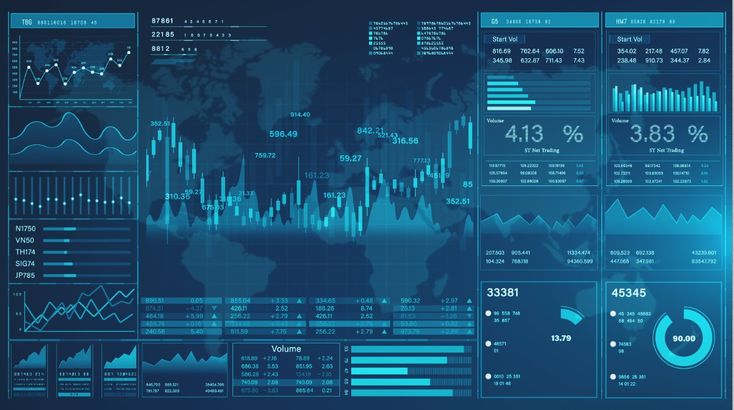
Cost models and financial flows are analyzed and optimized to improve efficiency, reduce risk exposure, and enhance profitability.

Process Optimization
Internal workflows are redesigned to reduce friction, eliminate redundancy, and improve execution speed across all operational layers.

IT Integration
Technology systems are aligned with operational processes, ensuring seamless interaction between infrastructure, data, and business logic.
Business Analysis & Diagnostics
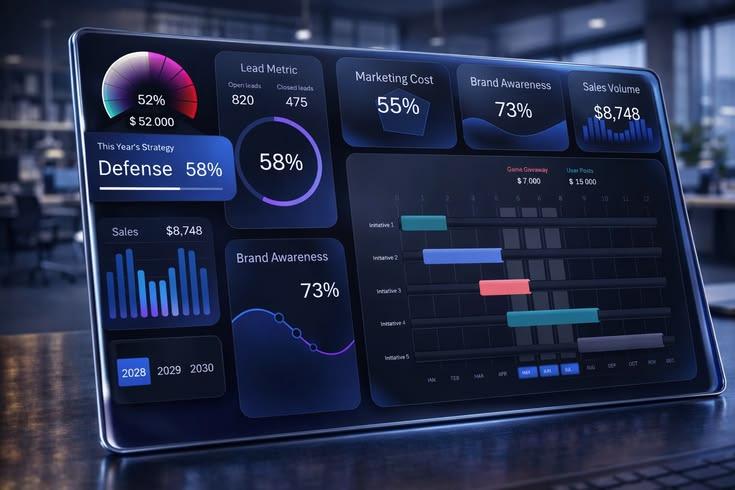
Operational structures are examined to identify inefficiencies, inconsistencies, and hidden constraints that impact performance and scalability.

Strategic Development
Long-term strategies are structured to align business growth with operational capabilities, ensuring sustainable expansion without instability.
Structuring Business for Stability and Growth
Unstructured growth introduces complexity that gradually reduces efficiency and increases operational risk. As organizations expand, processes become layered, decision-making slows, and systems lose alignment. Without intervention, this leads to fragmentation, higher costs, and reduced ability to respond to changing conditions.
A structured approach addresses these challenges by redefining how systems, processes, and decisions interact. Rather than focusing on isolated improvements, the entire operational environment is evaluated as a unified system. This allows inefficiencies to be addressed at their source, rather than through temporary adjustments that fail to produce lasting impact.
Stability is achieved when processes are clearly defined, systems are aligned, and decision-making follows a structured framework. Growth becomes sustainable when expansion is supported by infrastructure capable of adapting without disruption. This balance between stability and scalability forms the foundation for long-term operational success.
Structured Consulting Process
1
Initial Assessment
Business structure, processes, and systems are evaluated.
2
Problem Identification
Key inefficiencies, risks, and limitations are defined.
3
Strategy Design
Clear frameworks are developed to address identified challenges.
4
Implementation Alignment
Solutions are structured for seamless integration.
5
Continuous Optimization
Performance is monitored and refined over time.
Measured Impact, Not Assumptions
Consulting outcomes are defined by measurable improvements in operational performance, cost efficiency, and structural clarity. Each engagement is structured to produce tangible results that can be evaluated, adjusted, and scaled over time.
Rather than relying on theoretical models, solutions are grounded in real operational conditions, ensuring relevance and practical applicability. This approach minimizes uncertainty and allows businesses to maintain control over both current performance and future development.
Consistency Through Structure
Reliable outcomes require controlled processes, clear methodologies, and disciplined execution. Each stage of consulting is defined, monitored, and aligned with strategic objectives, ensuring consistency and predictability across all activities.
Trust is built through the ability to maintain performance over time, protect operational integrity, and adapt to evolving requirements without introducing instability.